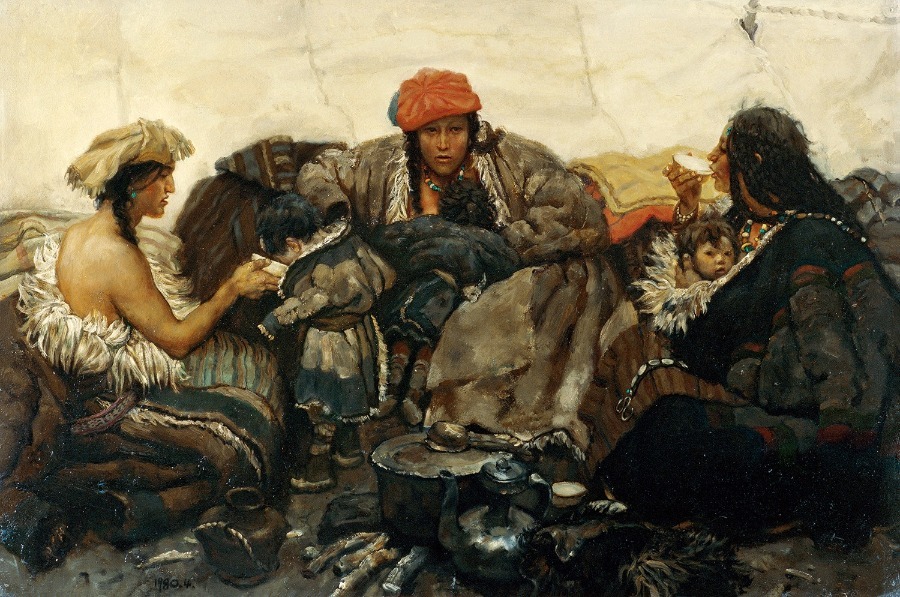
Chen Danqing
Introduction
Chen Danqing is a renowned Chinese painter, writer, and art academic known for his distinct artistic style and contributions to the field of art. He gained widespread recognition in China with his Tibetans series, a collection of seven oil paintings created in 1980 that vividly captures the essence of Tibetan life and culture. Beyond his artistic endeavors, Chen has played a pivotal role in art education and has been influential through his involvement in various exhibitions and cultural exchanges. Throughout his career, Chen Danqing has been celebrated for his ability to merge traditional Chinese art with contemporary influences, creating works that resonate with both historical depth and modern sensibility.
Early Life and Education
Chen Danqing was born in Shanghai, China, in 1953. From an early age, he showed a keen interest in art, which led him to pursue formal studies in the field. During his time at the Academy, Chen embarked on a journey to the Xizang autonomous region, which would later become a profound source of inspiration for his most acclaimed series of paintings. His education and early experiences in Xizang played a crucial role in shaping his artistic vision, blending a deep appreciation for Chinese traditional art forms with an openness to contemporary expression.
Artistic Career
Early Works
Chen Danqing's early works were characterized by their realistic portrayal of everyday life in China. His initial focus was on capturing the human condition through portraits and landscapes, often emphasizing the emotional and psychological depth of his subjects. The Tibetans series, completed in 1980, marked a significant milestone in his early career. This series of paintings, which includes the notable piece The Shepherds, brought Chen nationwide recognition and was a turning point in his artistic journey. The series was praised for its realistic depiction of life and culture in Xizang, capturing the vibrant colors and intricate patterns of traditional Tibetan attire and the profound human emotions of its subjects.
Transition to Contemporary Art
As Chen Danqing's career progressed, he began to explore more contemporary themes and styles. This transition was marked by a greater emphasis on abstract expression and experimentation with different mediums. Chen's ability to adapt and evolve his artistic style while retaining the core elements of realism is a testament to his versatility as an artist. His contemporary works reflect a synthesis of traditional Chinese artistic techniques with modernist influences, creating a unique and dynamic body of work that continues to garner attention and acclaim.
Influence and Style
Chen Danqing's artistic style is deeply rooted in the traditions of Chinese painting, yet it is characterized by a distinct modern sensibility. His ability to capture the essence of his subjects with precision and empathy has been a hallmark of his work. Chen's influence extends beyond his own creations; he has been instrumental in shaping the discourse around contemporary Chinese art through his writings and teachings. His works often explore themes of identity, culture, and the human experience, making them resonant with audiences both in China and internationally. Chen's style is celebrated for its ability to bridge the gap between the past and the present, offering viewers a window into the rich tapestry of Chinese culture while engaging with contemporary issues.
Notable Exhibitions
Chen Danqing has participated in numerous exhibitions both in China and internationally, showcasing his wide-ranging talents and contributions to the art world. Among his most notable exhibitions is the retrospective exhibition A Revisit to the Tibetans Series After Forty Years, held at the Chinese Academy of Oil Painting. This exhibition offered audiences a chance to explore Chen's creative process and the enduring impact of his Tibetans series. The exhibition featured life-size reproductions of the original paintings, along with sketches and preparatory works that provided insight into Chen's meticulous approach to art. His exhibitions have not only highlighted his own artwork but have also been instrumental in fostering cultural exchange and dialogue between different artistic traditions.
Academic and Teaching Contributions
Chen's teaching philosophy emphasizes the importance of maintaining a connection to traditional artistic practices while encouraging innovation and creativity. Through his academic contributions, Chen has played a crucial role in shaping the curriculum and approach to art education in China, fostering an environment where students are encouraged to explore their own artistic voices while learning from the rich heritage of Chinese art.








